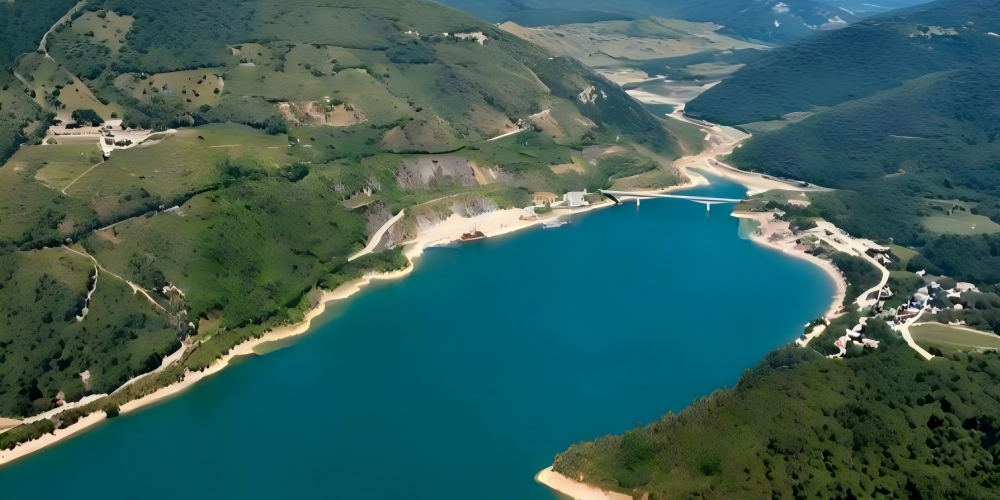
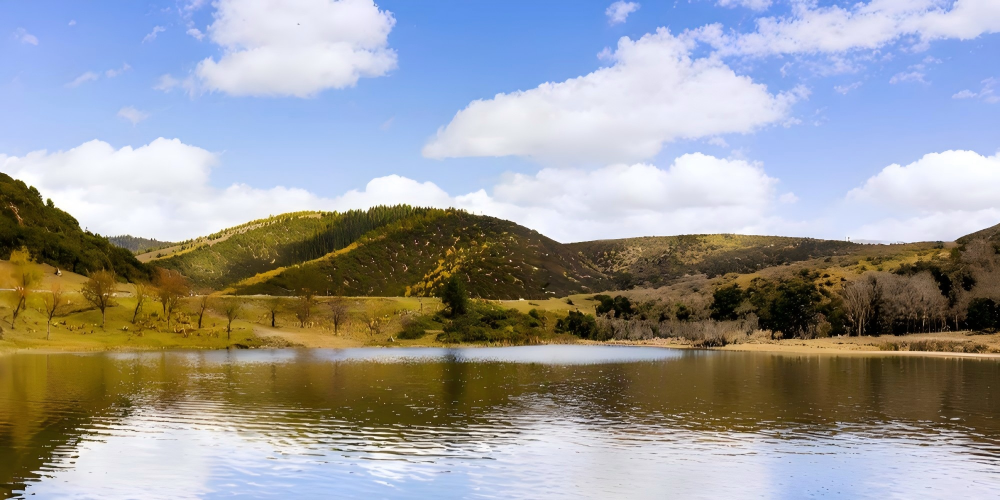
The Luoping Canola Flower Ocean attracts many travel and photography enthusiasts from China and abroad. Sites recommended for viewing and photographing the canola flowers include the Jinji (“golden rooster”) Peaks, Niujie Township, Wanzi Lake Reservoir, and Shiwanda Mountain. Every year during the flower season, Luoping County is submerged under a sea of canola flowers in riotous bloom. The Luoping Canola Flower Ocean is concentrated around the vicinity of Luoxiong Town, and is most conveniently reached by contract car.
3–5 hours
Free
주요 포인트
Natural sceneryNight viewNo. 6 of Best Things to Do in Qujing
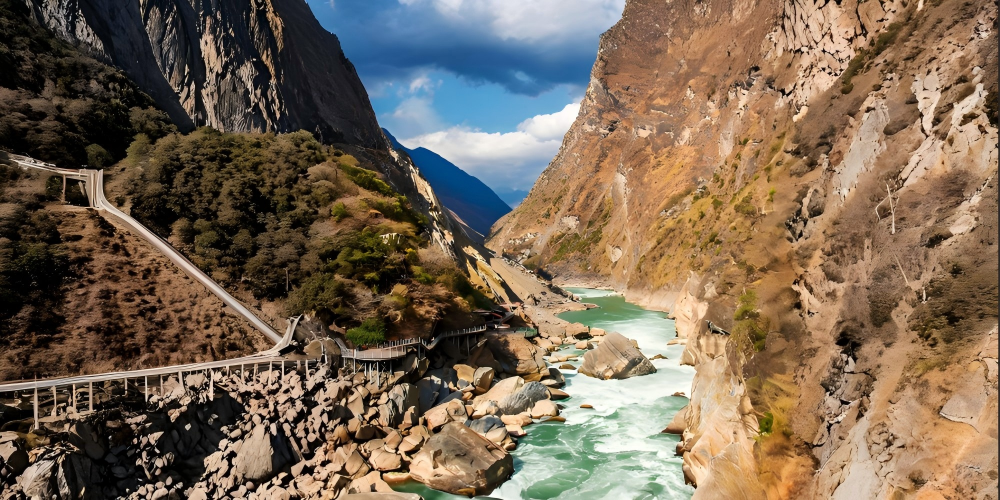
TIGER LEAPINGGORGE SCENIC AREA is located in the northeastern part of Longpan Township, Yulong Naxi Autonomous County, Lijiang City, Yunnan Province. Situated at the heart of the national key scenic area, it forms the first majestic and precipitous canyon view along the upper reaches of the Jinsha River in the Yangtze River system. Renowned for its depth, danger, wonder, uniqueness, and beauty, it ranks among the world's great canyons alongside Xizang's Yarlung Tsangpo Grand Canyon and the Grand Canyon in the United States, earning accolades as one of China's top ten canyons.The attraction is located 80 km from downtown Lijiang. The canyon stretches 17 km in length with a 25 km sightseeing route and a vertical elevation difference of over 3,900 meters. The 2.6 km sightseeing boardwalk within the TIGER LEAPINGGORGE SCENIC AREA is a major highlight. Towering on either side of the gorge are Yulong Snow Mountain and Haba Snow Mountain, with the narrowest point of the river spanning just over 30 meters. Massive boulders formed by geological movements create the spectacular "Tiger Leaping Rock," making the rushing waters even more turbulent and majestic. The scenic area enjoys a mild climate with an average annual temperature ranging from 4.7°C to 16.5°C. The canyon features a typical temperate to cold-temperate vertical climate zone, resulting in rich biodiversity and abundant plant and animal resources—a living classroom of nature. Visitors can explore numerous unique attractions, including the robotic tiger installation, miniature landscapes, the Free Buddha, flower waterfalls, flowing water cascades, Yubi Jinchuan stone carvings, Tiger's Mouth Boardwalk, Bamboo Forest Zen Boardwalk, Yuxin Bridge, Qingxin Bridge, Tiger Leaping Rock Viewing Platform, and tunnels. Here, visitors not only witness nature's awe-inspiring craftsmanship up close but also enjoy immersive cultural experiences. With well-developed facilities and thoughtful services, the scenic area ensures every visitor can safely and comfortably appreciate the grandeur of this magnificent canyon.
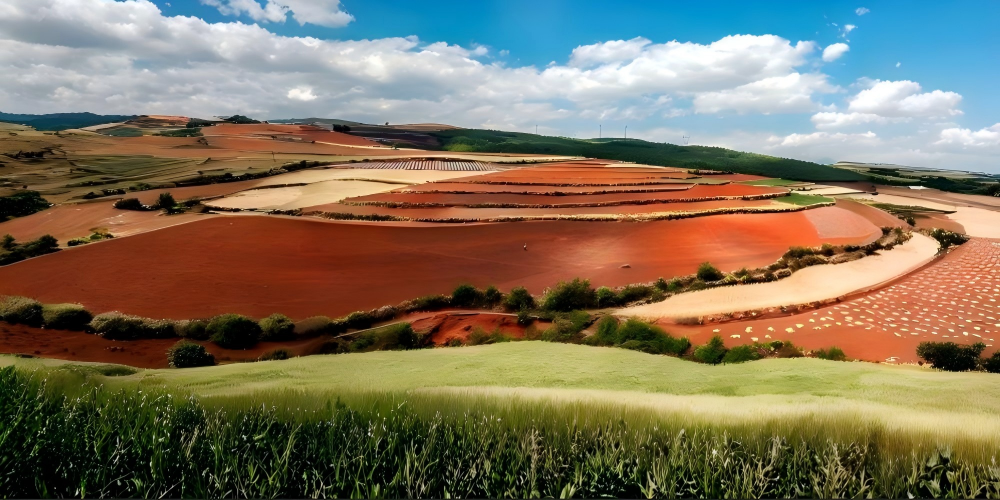
Dongchuan Red Land is located in the northeastern part of Kunming. Because the soil is rich in iron and aluminum, the earth has oxidized to form a dazzling crimson color. From a distance, the blue sky, white clouds, green crops and red earth merge to create a spectacular landscape unparalleled throughout the world. The sites of interest throughout Red Land are dispersed. Starting from the fork in the road near Huashitou Village, visitors may choose to go to Redland Town, to Dongchuan District, or to the Kunming Sanlu Highway. These three routes connect the main scenic spots and form three main lines of exploration: the northwest line, the northeast line and the south line. In recent years, Red Land has become a paradise for photography lovers.
“ShikaThe name originates from Tibetan, meaning "a place where red deer roam." Red deer are among the most sacred mascots in Tibetan Buddhism, their divine significance self-evident. Located just 7 km from downtown Shangri-La, Shika Snow Mountain is a comprehensive travel attraction conveniently close to Shangri-La Airport and the high-speed rail station within Diqing Prefecture. The attraction covers an area of approximately 65 square kilometers, stretching from the Highland Barley Rack Scenic Boulevard to the main peak of Shika Snow Mountain. It encompasses natural landscapes including the Yanqingbo Pasture, Lingxi Lake, and ancient gold mine ruins, featuring snow-capped mountains, pastures, sacred lakes, forests, and meadows—a microcosm of Shangri-La. The highest point is the main peak of Shika Snow Mountain at 4,449 meters above sea level, while the lowest point is the Napahai Meadow at 3,270 meters, creating a dramatic elevation difference of 1,179 meters. This area nearly encompasses all the vertical ecological zones of subalpine and alpine regions found in the "Three Parallel Rivers" World Natural Heritage Site of northwest Yunnan. Shika Snow Mountain is not only a sacred mountain of the Jiantang Basin but also a renowned alpine pasture. Rich in both natural and cultural resources, it offers immersive experiences in mountain blessing rituals, pastoral and agricultural traditions, folk culture, as well as unique geological formations and biodiversity. Shika Snow Mountain - the First God of Wealth Mountain in the World From afar, Shika Snow Mountain resembles a giant golden toad, with another massive stone toad perched atop its summit. These two toads quietly crouch southwest of Jiantang Town, having absorbed the essence of heaven and earth while gathering wealth from all directions for millennia. Historically, Shika Snow Mountain has been revered as Shangri-La's guardian mountain of prosperity. As early as 1,300 years ago, its peak served as a sacred altar where Tibetan kings performed rituals to worship celestial deities. During the Ming Dynasty, the Mu chieftains of Lijiang once mined gold here, creating a flourishing era—mining relics still remain on the mountain today. Thus, Shika Snow Mountain is also known as the World's First Mountain of Wealth, where pilgrimage is believed to bring financial fortune and good luck. Shika Snow Mountain - the sacred snow peak where you can pay homage to the eight great divine mountains. The only snow mountain offering panoramic views of the eight sacred mountains. From the summit of Shika Snow Mountain, you can enjoy unobstructed panoramic views of the surrounding peaks, including the Three Sacred Snow Mountains of Daocheng to the east.Chenresig, Jampelyang, and Chanadorjeto the south you can see Haba Snow Mountain and Jade Dragon Snow Mountain, to the west lies Biluo Snow Mountain, and to the north overlooksMeili Snow Mountain, Baima Snow Mountain...Such a miraculous and spectacular sight, the extraordinary privilege of worshiping the eight sacred mountains at the summit, is unparalleled anywhere else in the world! The eight sacred mountains resemble eight pure white lotus petals encircling Shika Snow Mountain at their very center, earning it the reputation as the place where the eight-petaled lotus blooms in the sacred realm of Shangri-La. Yana Qingbo Pasture - Emerald in the Valley Nestled on the slopes of Shika Snow Mountain at an altitude of 3,746 meters, Yanqingbo Pasture resembles an emerald embedded in the forest. During spring and summer, the meadow blooms with flowers as cattle and sheep graze leisurely. Herders prepare butter tea nearby, while wisps of smoke rise from the wooden cabins, painting a picture of simple, unhurried life. Lingxi Lake – A Place to Pray for Love Lingxi Lake, known as "Mabeng Yangcuo" in Tibetan, covers an area of 30,000 square meters. Surrounded by dense national rare protected plants like long-bracted fir trees, the understory features shrubs like rhododendrons and swamp meadows, creating a serene and mysterious atmosphere. In summer, the lakeside meadows burst into colorful blooms, with the striking alpine ornamental medicinal plant Rheum alexandrae and rhododendron bushes standing out. The large yellow-white bracts of Rheum alexandrae grow in layers on their stems, resembling miniature golden lotus pagodas towering by the lake. Shika Snow Mountain andQianhu Mountain Scenic AreaConnected as one, the area is renowned for its numerous lakes. The Black Sea, Lingxi Lake, and Red Sea on Shika Snow Mountain are all located at elevations above 3,800m, representing classic glacial erosion lakes. It connects withThe formation lakes in Napa Lake Scenic Area and Potatso National Park are different., making it one of the distinctive views of Shika Snow Mountain. Vertical zonation landscapes and biodiversity The distinct vertical ecological zones showcase Shika Snow Mountain's remarkable biodiversity. At 3,270–3,300m lies the subalpine meadow, where azaleas, buttercups, wolf's bane, primroses, and irises bloom in vibrant competition during spring and summer, creating a dazzling "five-flower meadow." Between 3,300–4,100m stretches the subalpine cold-temperate coniferous forest belt. From afar, the emerald-green Larix potaninii forests contrast strikingly with the dark-green Abies forests, while diverse shrubs and herbaceous plants thrive beneath the canopy. Above 4,100m, alpine shrub meadows and scree slopes host rare species like Meconopsis, Bergenia, Potentilla anserina, snow tea, golden alyssum, Primula pulchella, and Pedicularis.
3–5 hours
From USD 4.43
주요 포인트
Mountain climbingNo. 8 of Best Things to Do in Diqing
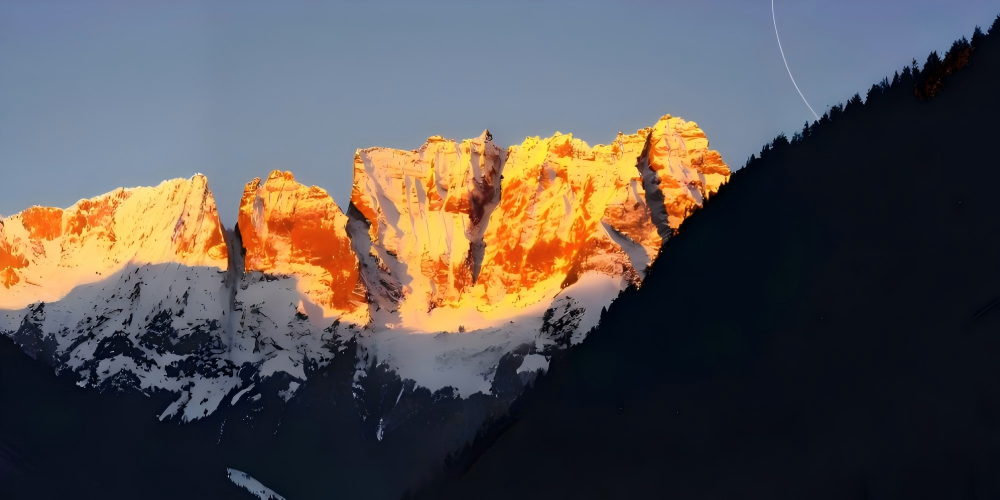
Mainri Snow Mountain is also known as the Prince Snow Mountain. Its main peak, Kawa Garbo, means “the steep white snowy peak in the valley.” According to legend, it is the protector God of the Nyingma Branch of Tibetan Buddhism. The famous "Sunshine Over the Golden Mountain" is a rare sight for many backpackers. It is also a favorite destination for outdoor enthusiasts and photography enthusiasts.
1–2 days
From USD 0
주요 포인트
Mountain climbingNight viewNo. 2 of Night Attractions in Diqing
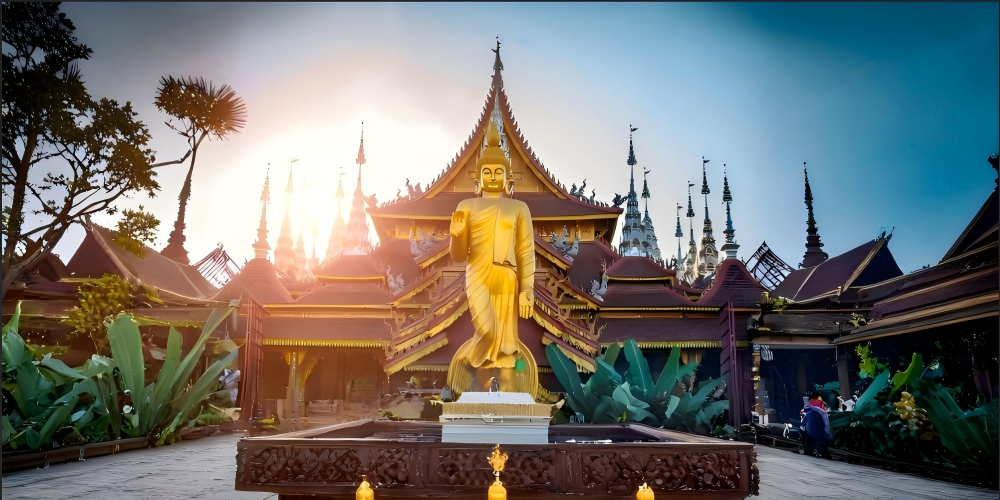
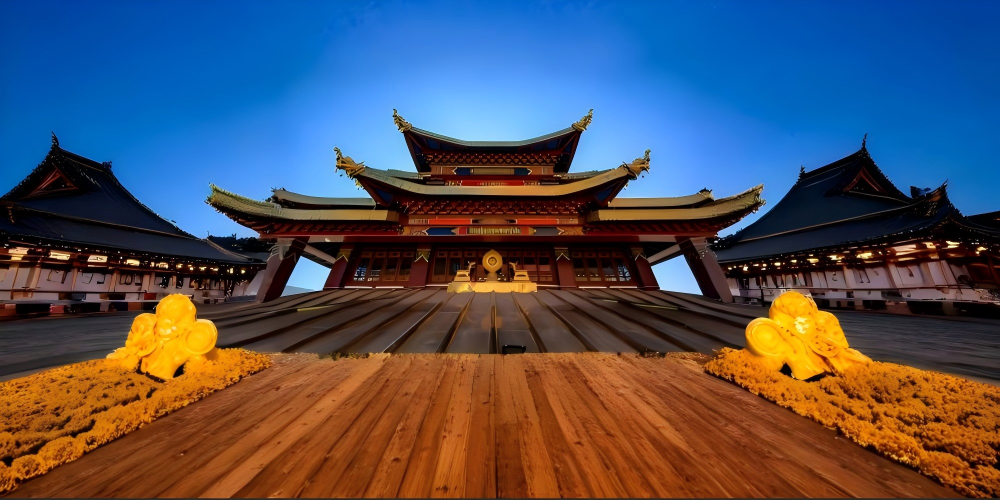
The Xishuangbanna General Buddhist Temple is located near Manting Park in Jinghong Town, serving as the spiritual center for Buddhist devotees in Xishuangbanna, with a continuous stream of worshippers visiting. The temple's grand and majestic architecture features unique details in every corner, with exquisitely carved beams and pillars that offer visual delight. The Xishuangbanna General Buddhist Temple is connected to the Manting Imperial Garden, and visitors typically enter the temple through the garden. Visitors can first admire the magnificent exterior architecture, and if time permits, step inside to experience Buddhist rituals, quietly meditate, and listen to the sounds of nature. Known as "Waba Jie" in the Dai language, the Xishuangbanna General Buddhist Temple has long been the central pilgrimage site for local Buddhists. Before liberation, it was a sacred place where the region's highest rulers and chieftains came to pray, and it remains one of the most prestigious Buddhist temples in Xishuangbanna.
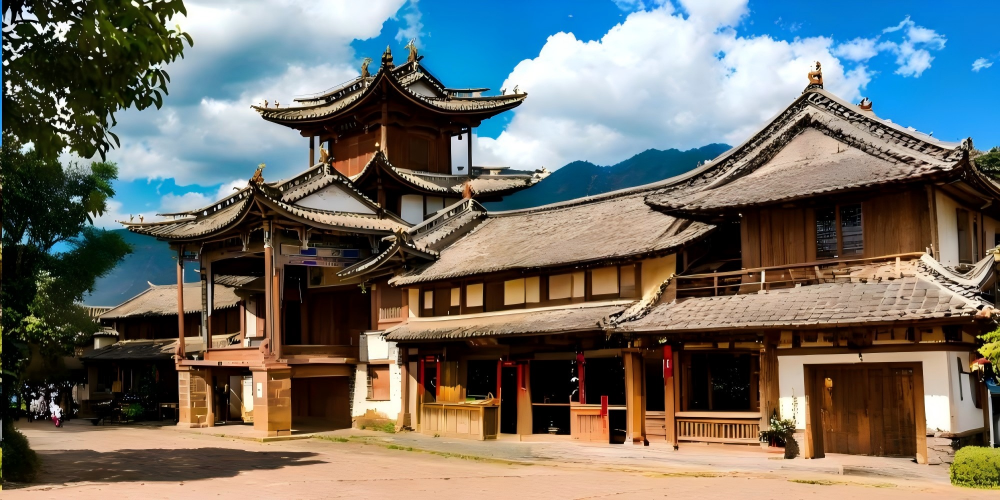
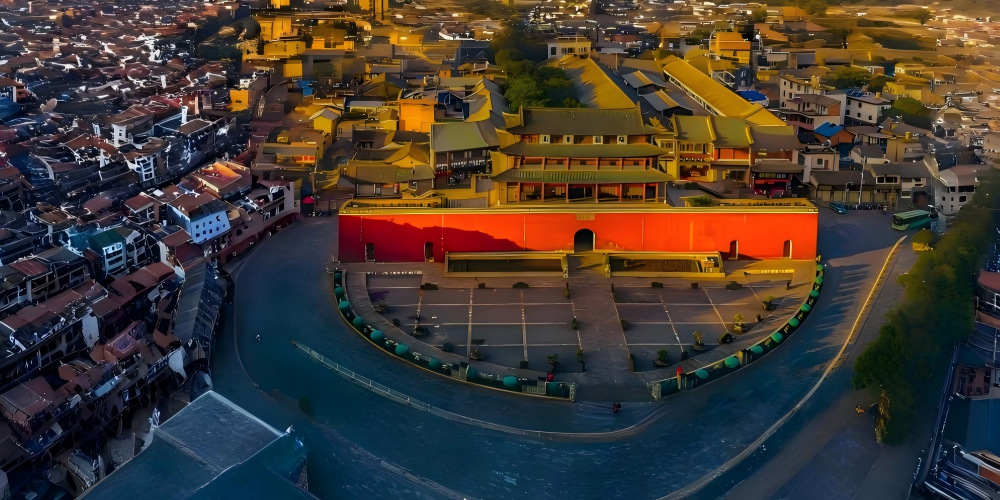
Ancient Town Shaxi was once an important stop along the Ancient Tea Horse Road. As the route declined, it gradually faded into obscurity. However, this very isolation has preserved its tranquil, rustic charm, allowing it to retain the authentic atmosphere of its tea-trading past. Locals in northwest Yunnan say: "Visit Dali, pass through Lijiang, but don't miss Ancient Town Shaxi." Tour Route Crossing the ancient stone bridge over the Heihui River—Yujin Bridge—and walking about 100 meters along the old trail, you'll reach the East Village Gate, locally known as "Jiezi Gate." Built with rammed earth, this narrow gate allows only two horses to pass simultaneously, preserving its original appearance from the Tea Horse Road era. Beyond it lies Sideng Street, the sole surviving market along the Tea Horse Road and the heart of Ancient Town Shaxi. The street is paved with red sandstone slabs, flanked by an ancient opera stage facing west on the east side and Xingjiao Temple facing east on the west side, creating a symmetrical layout that divides the square into northern and southern halves. Surrounding the square are shops and horse inns, with three ancient alleyways extending in all directions of the town. Ancient Town ShaxiHighlights: Xingjiao Temple Xingjiao Temple is a major highlight of Ancient Town Shaxi. As one of the few remaining Bai ethnic "Atoli" Buddhist temples from the Ming Dynasty in China, its exquisite murals and carvings are worth savoring. Visitors can enter for free by registering their ID cards. During ethnic festivals, Bai people dressed in traditional costumes gather at Sifang Street, playing the dragon-headed sanxian and performing songs and dances on the stage. The bustling square fills with crowds while devotees worship at the temple, creating a joyous atmosphere. The liveliest celebration is the annual Prince Festival on the eighth day of the second lunar month. Accommodation and dining Ancient Town Shaxi is quite small and can be explored in just 1–2 hrs of casual strolling. However, if time allows, we recommend staying overnight to leisurely wander along the old streets and savor the tranquil charm that Dali Ancient Town lacks. The town offers affordable accommodations like youth hostels and various inns. You can grab meals at roadside eateries or try local specialties such as yacon, matsutake mushrooms, and milk cakes.
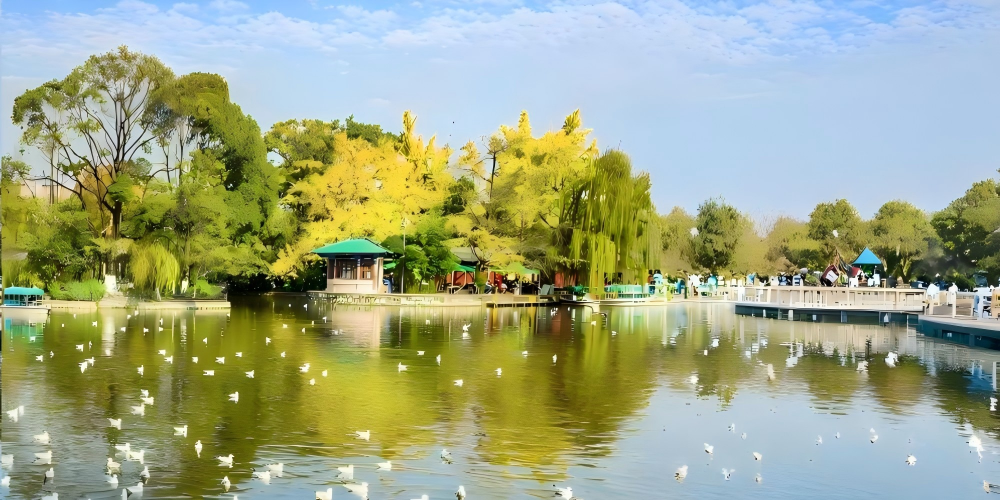
Located in northern Kunming, opposite Yunnan University, Green Lake Park is a beautiful urban park and a popular destination for tourists. Its emerald waters, elegant trees, and lotus ponds offer a delightful winter getaway, perfect for feeding and photographing the thousands of red-billed gulls. Centered around Green Lake, the park is divided into five scenic areas by Ruan Causeway, which runs north-south, and Tang Causeway, which runs east-west. The Lake's Heart Island scenic area features Qing Dynasty buildings such as the Lake Heart Pavilion and the Fish Viewing Tower. The Lake Heart Pavilion, also known as the "Biyi Pavilion," boasts elegant yellow-tiled eaves and beautifully designed courtyards, serving as the venue for various exhibitions. To the southeast lie the Water Moon Pavilion and Goldfish Island; to the northeast lie the Bamboo Forest Island, Nine Dragon Pond, and the Zhichun Pavilion, where people gather during festivals to sing folk songs, creating a unique atmosphere. Willow trees rustle along the embankment, the fragrance of lotus flowers wafts through the lake, and pavilions and towers on the island add to the beauty and freshness of Green Lake. Autumn is a perfect time for viewing autumn leaves. Starting in late October, the maple trees in Cuihu Park gradually turn red, transforming from golden yellow to deep crimson overnight. The layered red maple forests blend beautifully with the lake, creating a breathtaking autumn landscape. Every year at the beginning of winter, thousands of red-billed gulls arrive from the north to spend the winter. This vibrant time brings Cuihu Park to its peak, with residents and tourists flocking to feed the birds and interact with them. This harmonious atmosphere adds endless joy to the park. After exploring Cuihu Lake, the four streets surrounding the park (Cuihu East Road, Cuihu South Road, Cuihu West Road, and Cuihu North Road) are lined with unique shops, cafes, and bars. You can spend a leisurely afternoon strolling around the lake, or immerse yourself in the vibrant nightlife as night falls. Cuihu Park is also close to the former site of the Yunnan Military Academy and Yunnan University, making them worth exploring.
1–3 hours
Free
주요 포인트
Boat tourNight viewNo. 2 of Cool Water Escapes in Kunming
The ancient city of Jianshui, known as Lin'an historically, is a famous city with a profound historical and cultural background. It is located in Jianshui County in Honghe Prefecture. The ancient city of Jianshui is listed as a National Historical and Cultural City. It has been in existence for twelve centuries. The ancient buildings in the city are beautiful and well preserved. The Temple of Literature, Zhu's Garden and the School of Examinations in the ancient city all reflect Confucius’s ethos of the ancient city of Jianshui. More than fifty ancient buildings have been preserved to date, which won Jianshui the moniker the “Ancient Architecture Museum” and the “House Museum.”
3–5 hours
From USD 0
주요 포인트
Historic landmarkNight viewNo. 16 of Night Attractions in Yunnan
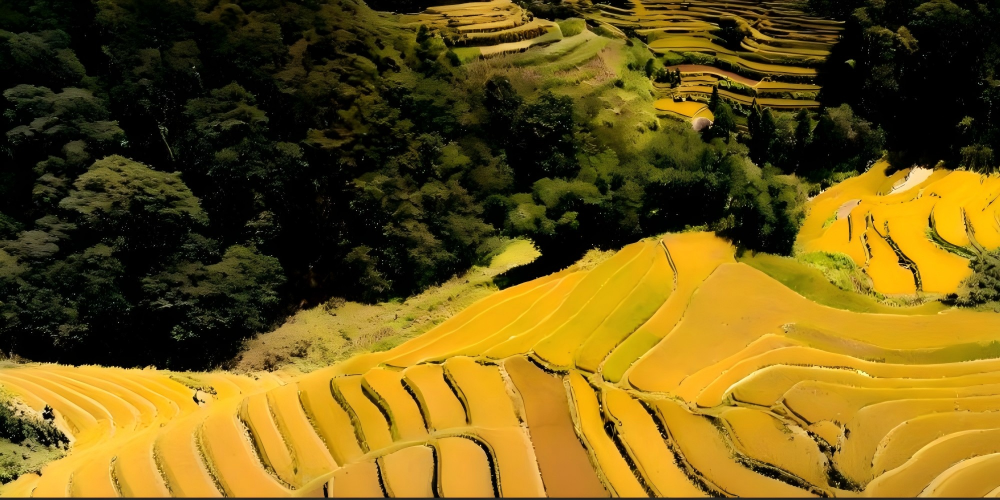
The Honghe Hani Rice Terraces are located on the southern slopes of the Ailao Mountains in Yunnan province. They were constructed over generations by the local Hani people. There are four major scenic spots in the area: Bada, Tiger Mouth, Duoyishu, and Jingkou Village. The rice terraces look particularly beautiful at sunrise and sunset. The frequent early morning mist that envelops the terraces creates a surreal landscape. Visitors can also learn about the Hani people's unique culture.
Dukezong Ancient Town is Located on the southeast corner of Shangri-La County in Yunnan province, Dukezong Ancient Town is an ancient Tibetan town with a history of more than 1,300 years. Diqing Tibetan Autonomous Prefecture and was built for the Tubo Kingdom of the Tang Dynasty. "Dukezong" is a Tibetan pronunciation, meaning "Moonlight City" and "castle built on stone”. Dukezong Ancient Town is built on the mountain foot and the road surface was paved with slate from the ceaseless up-and-down undulations of paved roads, you can still find the faint imprints of horseshoes , which is the token left by the long-time horses and precious token from the ancient caravans since the town is the last stop of Old Tea - Horse Road.
3–5 hours
From USD 0
주요 포인트
Night viewNo. 1 of Family-friendly Attractions in Diqing
Shuhe Ancient Town is located in the ancient city of Lijiang, which is the northwestern part of Dayan Ancient City. It is an important station on the ancient tea-horse road. The structural layout of the ancient town is similar to that of the Dayan Ancient City. There are many ancient buildings, and there are clear small rivers between the roadways. The environment is very beautiful. Walking in the ancient town, you can still feel the prosperity of its past. The Tea Horse Road Museum has a wealth of historical information to impart and is well worth seeing.
3–5 hours
From USD 0
주요 포인트
Mountain climbingNight viewNo. 19 of Night Attractions in Yunnan
Dali Ancient City lies at the foot of the picturesque Cangshan Mountain, serving as the former capital of the ancient Nanzhao and Dali kingdoms. This is a place made for living—locals follow the sun's rhythm, tending to flowers and basking in sunlight during leisure hours. With its abundant sunshine and pleasant climate, it attracts countless visitors.In Dali Ancient City, you can spend your day strolling along Fuxing Road, a pedestrian street lined with shops selling local specialties like marble carvings, ethnic costumes, and regional snacks. Browse through the vibrant stores to discover unique handicrafts, and when you need a break, stop by the roadside eateries to sample authentic local flavors.At night, immerse yourself in the local vibe by joining the crowds at Foreigner Street and Renmin Road. This area boasts an array of unique bars and cozy cafes, with some venues featuring live performances by resident singers or impromptu acts from fellow travelers. The lively atmosphere is electric. Lose yourself between cocktails and music to discover your own unforgettable nightlife experience.
The Lijiang Ancient City is a UNESCO World Heritage Site that has a history of over 800 years. It was an important stopover point in ancient times playing a very important role in the trading activities among Yunnan, China hinterland, Tibet, India and many other neighbouring Asian countries. The town is full of ancient wooden buildings, stone roads, and small bridges. It is the only old city built without a city wall. Standing in the city, you can see the Jade Dragon Snow Mountain. Several television series were also shot here. The former mansion of the Tusi people (Mu Mansion) and the Naxi ancient music performances should definitely be on your checklist.
0.5–1 day
From USD 0
주요 포인트
Historic landmarkNight view2026 Asia 100 - Night Attractions
Songzanlin Temple, also known as Guihua Temple, is located at the foot of Foping Mountain, 5 kilometers north of Shangri-La. It is not only the largest Tibetan Buddhist temple complex in Yunnan, but also the center of the Yellow Sect in northwestern Yunnan, known as the "Little Potala Palace". The monastery is built on the mountain and looks like an ancient castle. Every year on the 29th day of the 11th lunar month, Tibetans hold the Gedong Festival, which is mainly based on "God Dance" (mask dance). The atmosphere is mysterious and warm.
Erhai Lake, known as Yunnan's "Pearl of the Plateau," is the heart and soul of Dali. Despite being called a "sea," it's actually a magnificent freshwater lake shaped like a crescent moon resting at the foot of Cangshan Mountain, where the breathtaking harmony of water and mountains creates an utterly mesmerizing landscape.Erhai Lake is located in Dali City, situated in the watershed area of three major river systems: the Lancang, Jinsha, and Yuan rivers. With a surface area of approx. 252 sq km, it measures 42.5 km in length from north to south and averages 6.3 km in width from east to west, featuring a shoreline of 128 km. It ranks as Yunnan's second largest freshwater lake after Dianchi. The lake earned its poetic name "Erhai" (meaning "Ear-shaped Sea") from ancient people due to its ear-like shape and its vast, sea-like expanse of misty waters.Erhai Lake boasts not only breathtaking natural scenery but also profound Bai ethnic culture and historical significance. Revered since ancient times as the "Silver Cangshan and Jade Erhai," it's home to the famed "Moon over Erhai" among Dali's "Wind, Flower, Snow, and Moon" quartet of attractions. The lake is dotted with scenic spots like Golden Shuttle Island, Little Putuo Island, and Nanzhao Folklore Island. Golden Shuttle Island stands out as Erhai's only inhabited primitive island, preserving intact Bai fishing village architecture and Benzhu worship traditions, with its annual Torch Festival's pine resin powder ritual leaving visitors awestruck. Folk celebrations like the "Sea Play Festival" originate from legends such as Lady Baijie's martyrdom and Duan Chicheng's serpent-slaying, embodying the shared values of loyalty and guardianship among multiple ethnic groups.Today, cycling around Erhai Lake, strolling along the ecological corridor, enjoying Bai ethnic songs and dances on a cruise, and savoring the Three-Course Tea have become classic ways for travelers to immerse themselves in the breathtaking scenery of Cangshan Mountain and Erhai Lake. Whether it's the serene sunrise at Longkan Pier in the early morning, the viral waterside grove at Panxi S Bend, or the lakeside cafes in Shuanglang Ancient Town, Erhai Lake always offers a poetic retreat for every visitor.
The Chongsheng Temple and the Three-Pagoda Culture Tourist Area is located 1.5 km north of Dali Ancient Town, serving as the royal temple during the Dali Kingdom period. Nestled between Erhai Lake to the east and Cangshan Mountain's Yinglue Peak to the west, it boasts breathtaking scenery. The three pagodas were originally part of Chongsheng Temple. While the current temple is a reconstruction, the pagodas remain as thousand-year-old relics and the area's main attraction. Visitor route: Upon entering through the main gate, you'll immediately see the three pagodas standing along the central axis on a raised platform. The central Qianxun Pagoda, flanked by two smaller pagodas to the north and south, forms an impressive triangular layout. Their architecture resembles Xi'an's Small Wild Goose Pagoda. The best photo spot is at the Reflection Pool in Three Pagodas Reflection Park behind them, where visitors capture perfect shots of the pagodas with their mirror images. Beyond the pagodas, follow the central axis to explore cultural relics excavated during restoration at the exhibition hall, see the 16-ton Nanzhao Bell in the Bell Tower, and admire the Rain-Copper Guanyin statue before reaching Chongsheng Temple. Reconstructed in 2005, this grand temple recaptures the imperial splendor of the Nanzhao and Dali periods, featuring over 10,000 dragon carvings - the most in any Chinese temple. Don't miss the massive 3.1m-diameter drum made from a single oxhide, another remarkable highlight.
2–3 hours
From USD 10.78 (market USD 11.07)
주요 포인트
Historic landmarkBoat tourNo. 17 of Best Things to Do in Yunnan
Heshun ancient town is located 4 km west of Tengchong county. Built in the Ming dynasty, it was originally named "Heshun" due to a small river winding around the village. Later, literati renamed it "Heshun" meaning "harmony and prosperity". As a famous hometown of overseas Chinese in Yunnan province, Heshun ancient town was a key stop on the ancient tea-horse road and an essential part of the southwest silk route. Heshun ancient town is built around the mountains, gradually rising from east to west, stretching for two to three kilometers. The town is dotted with ancestral halls, archways, and ancient residences from the Ming and Qing dynasties. In front of the town lies a vast plain, with clear streams winding around the village and weeping willows brushing the banks, creating a harmonious pastoral scenery. The main attractions in the town include: the Dian-Myanmar anti-Japanese war museum, Heshun ancient town - Zhongtian temple, Wanlouzi, Liu's ancestral hall, and Ai Siqi memorial hall.Wenchang palaceHeshun library Wandering through the winding alleys of the ancient town, you can explore its old houses, historic streets, and ancestral halls. The Wanlouzi folk house museum will open your eyes to unconventional architecture - no wonder the popular TV series "Beijing love story" chose this location for filming. The Cunshi ancestral hall and the former residence of the jade king will leave you marveling at the exquisite craftsmanship of the town's buildings. When tired, rest at the teahouse in the Liushi ancestral hall and savor tea brewed with local Longtan water and chestnut charcoal fire - a truly memorable flavor. At the Heshun library, you can witness artisans making traditional Xuan paper, one of Tengchong's three treasures (Tengchong paper, Tengchong medicine, and Tengchong bamboo weaving). Feel free to purchase some as souvenirs if interested. When you're tired from walking and hungry, the various snacks in the ancient town will not only satisfy your appetite but also let you savor the long and eventful history. Cun's bean powder and Aunt Lin's pine flower cakes carry the flavors of time. Or simply sit down at any restaurant and order local specialties like "three drops of water," "brain," or "earthen pot." Just the food alone will make your trip worthwhile. Heshun Ancient Town covers a large area with numerous attractions, making it impossible to explore fully in just one day. Consider staying overnight in the town to not only have ample time for sightseeing but also to experience the charm of guesthouses converted from ancient residences. The town boasts many such inns, mostly renovated from traditional homes, some featuring spacious two or even three-courtyard layouts at affordable prices. Find a guesthouse you like, sleep in until you wake naturally, then leisurely stroll to the snack stalls at the town entrance for a bowl of the famous local dish "dajiujia." Afterwards, bask in the sun at the riverside laundry pavilion and savor Heshun's relaxed pace of life like a local.
Lugu Lake Scenic Area is located on the border between Yunnan and Sichuan, at an elevation of approximately 2,685m. Known as the "Pearl of the Plateau," it boasts enchanting scenery and pristine local customs.Highlights OverviewLugu Lake Scenic Area is surrounded by green mountains, with a winding and graceful shoreline. Along the lake, there are 17 beaches and 14 bays. Scattered across the lake are 5 islands, 3 peninsulas, and 1 causeway-connected island. Among them,Liwubi Island, Xiwae Island, and Lige Island are collectively known as the "Three Fairy Islands" of Lugu Lake Scenic Area.From June to August each year, the lake is adorned with blooming water snowflakes. These pristine white flowers, scattered like stars across the water's surface, sway delicately with every breeze, creating an enchanting scene reminiscent of a fairyland on earth.There are many villages along the lake, with the more developed ones offering food and accommodation being mainlyDaluoshui VillageHeli Village.Daluoshui VillageLocated on the southwest shore of Lugu Lake Scenic Area, it is one of the earliest developed villages by the lake, where the round-trip shuttle buses from Lijiang stop. Lige Island and Lige Village on the northwest shore have become popular tourist hubs in recent years. On the northern shore lie Nise Village, Xiaoluoshui, and Dazui Village, which are quieter with fewer visitors. Further east enters Sichuan Province, where the Grass Sea and the Princess's Former Residence on the southeastern shore are also worth a visit.
Located in the center of the Shangri-La Scenic Area, Pudacuo National Park is an important part of the world's natural heritage, called the Three Rivers Convergence. It consists of three parts, namely Bitahai, Shuduhu, and the Xiagei Folk Culture Village. The park has beautiful scenery, a well-preserved ecological environment, quiet and clear mountain lakes, vast pastures, wetlands filled with flowers and lush virgin forests. Every spring, the park is filled with blooming rhododendrons, while the Autumn brings with it the rich colors of changing leaves.
0.5–1 day
From USD 35.13
주요 포인트
Natural sceneryBoat tourNo. 10 of Best Things to Do in Yunnan
Cangshan Mountain, also called Diancangshan Mountain, is located on the west side of the Erhai Lake in Dali. It's scenery is spectacular and it is one of the four scenic spots of Dali. The main peak of the mountain is snowy all year round and the mountain is often shrouded in clouds. You can take the cablecar up the mountain or walk up the mountain. After ascending the Cangshan Mountain, you can overlook the beautiful Erhai Lake and Dali Ancient City.
3–5 hours
From USD 47.23
주요 포인트
Mountain climbingNo. 6 of Cool Water Escapes in Yunnan
Tiger Leaping Gorge is famous for its size. It is located in the eastern part of Hutiaoxia Town, Shangri-La County. It is divided into three sections: upper, middle and lower gorges, with a total length of about 20 kilometers. In the middle of the gorge is the Jinsha River. On both sides are the snow-capped mountains of Yulong and Haba. The narrowest part of the river is only twenty or thirty meters and with the huge drop, the river flows very rapidly! Tiger Leaping Gorge is also a world-renowned hiking resort visited by many outdoor enthusiasts every year.
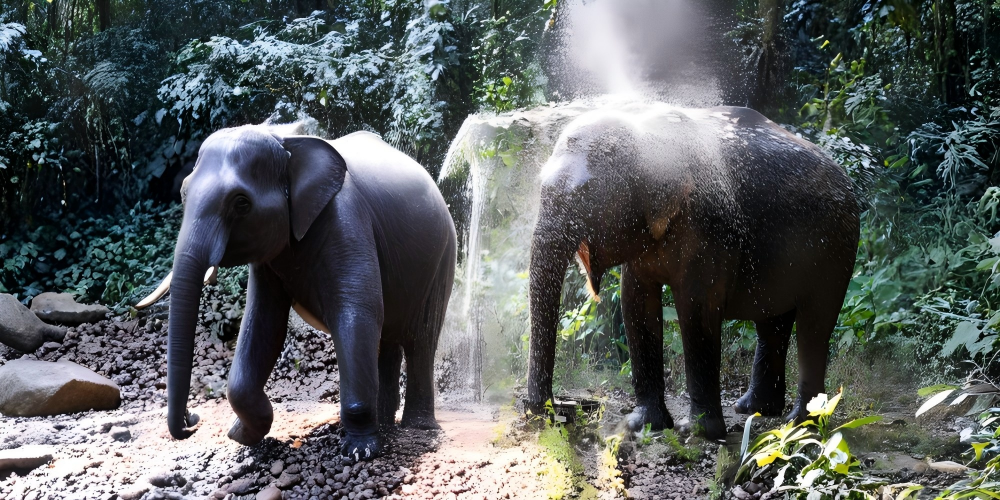
Located in Jinghong, Yunnan Province, Wild Elephant Valley is a place frequented by wild Asian elephants, hence the name. A footpath as long as 4,000m winds its way amid tropical forests inside, where roaming along, one may get an intimate feel of the rain forest. Rare tropical plants dot either side of the pathway. One may even spot tracks left behind by wild elephants.
The Xishuangbanna Tropical Botanical Garden of the Chinese Academy of Sciences is located in Yilun Town, Mengla County, Xishuangbanna. The park is divided into two parts: the eastern area and the western area. The West District is the main attraction. It includes more than 20 specialized botanic gardens. The “Exotic Flower Garden" is the most popular among tourists. Eastern District is a large area of old-growth tropical rain forest. Most areas are paved with viewing trails, suitable for travelers who enjoy hiking.
0.5–1 day
From USD 11.81
주요 포인트
Hiking2026 Global 100 - Family-friendly Attractions
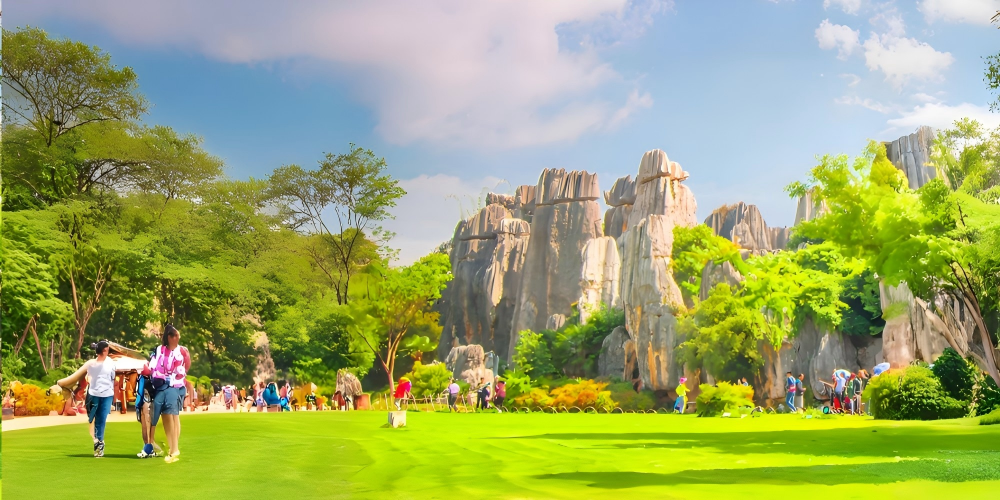
The Stone Forest Scenic Area is located in Shilin County, Kunming, and is one of the key attractions in the city. This scenic area showcases typical karst landforms, featuring stone peaks, pinnacles, sinkholes, and underground rivers. The towering rock formations take on various shapes—sword-like, pagoda-like, mushroom-like, and more—creating a breathtaking and fantastical landscape. The Stone Forest Scenic Area is divided into several widely spaced sections, with the Greater and Lesser Stone Forest attractions at its core. The Naigu Stone Forest is located approx. 12 km north of the main attractions, while the Dadie Waterfall scenic area sits approx. 29 km southwest. The Changhu Lake area is positioned 26 km southeast of the main site. When visitors refer to touring the Stone Forest, they typically mean exploring the Greater and Lesser Stone Forest sections. The Greater and Lesser Shilin are located in the same area. After purchasing tickets at the main entrance and walking along the path for 20 minutes, you'll find the smaller and more gently sloped Lesser Shilin Scenic Area on your left. Amidst the dense cluster of peaks stands the famous Ashima Stone, where the majestic karst formations resemble a graceful Yi ethnic maiden named Ashima, seemingly waving to visitors—a favorite photo spot for travelers. Beyond the striking Ashima, the Lesser Shilin area features other captivating views like the Steed and Pillar Supporting the Sky, each with unique shapes. This is where your imagination is put to the test. If you find your imagination lacking, we recommend hiring a guide who can offer fresh perspectives on these remarkable formations. As you drive leisurely along the highway, you'll encounter a series of remarkable rock formations lining the roadside—the Tang Monk Stone, Stone Prison, Phoenix Combing Its Wings, and Lingzhi Mushroom Rock—each vividly lifelike and exquisitely crafted by nature's artistry, presenting their unique postures to showcase Earth's wondrous creations. Strolling along the pathway, you'll unexpectedly arrive at the Great Stone Forest Scenic Area. After marveling at wonders like "Two Birds Sharing Food," "Rhinoceros Gazing at the Moon," "Lotus Peak," "Shilin Grand View," and "Stone Screen," you might feel slightly fatigued. Take a peaceful break at Lion Pavilion while admiring the inverted peaks reflected in Lion Pool across the way. After prolonged exposure to these karst formations, visual fatigue may set in—making it the perfect moment to shift perspectives. Board a cruise on Shilin Lake, where mountain vistas and water scenery converge into one breathtaking panorama, dissolving all stress and worries. If you prefer not to walk, electric carts driven by Yi ethnic women shuttle between attractions and stop upon request. You can still marvel at the wonders of the Stone Forest Scenic Area, and some friendly drivers may even share interesting local anecdotes along the way. Naigu Stone Forest, also known as New Stone Forest or Mozhai Stone Forest, is located 13 km north of the Stone Forest Scenic Area. It features a landscape composed of stone formations, Baiyun Lake, Shifeng Mountain, and Yougu Xianpu Waterfall. Compared to the Stone Forest Scenic Area, this site offers a distinct style. The towering gray-black stone pillars here are densely packed, resembling castles, towers, and mushrooms. The rugged, primitive rock formations surge skyward like waves, creating a majestic atmosphere. Walking through these dark peaks feels like stepping into a primeval world.
3–5 hours
From USD 19.18
주요 포인트
Natural sceneryBoat tourNo. 3 of Best Things to Do in Yunnan
Dianchi Lake is also called Kunming Lake. It is the sixth largest freshwater lake in China. It has the nickname of "Sparkling Pearl Embedded in a Highland". The lake is wide and spectacular. Every winter, a large flock of red-billed gulls migrate here from Siberia, making it a good place for bird watching and bird feeding. There are different ways to explore Dianchi lake. You can stroll around the lake, cycle, or ride a boat. You can also climb up to the Dragon Gate overlooking Dianchi Lake to get a better view of the entire lake.
Sacred Mountain and Holy Lake The sacred mountains and lakes are located in the heartland of the Gangdise cultural sphere, the birthplace of the ancient and enduring indigenous religion of Xizang, Bon. To this day, the sacred mountains and lakes region remains jointly revered by Bon, Tibetan Buddhism, Hinduism, and Jainism."The "Center of the World." Every year, countless devoted pilgrims from all directions still make arduous journeys to this sacred site. The unique natural landscape where towering holy mountains mirror sacred lakes on the Tibetan Plateau, combined with its legacy as a cradle of ancient civilizations and spiritual pilgrimage destination, elevates this sacred mountain-lake region to unparalleled heights—both physically and spiritually.The majestic sacred mountain, Mount Kailash, is hailed as the pantheon of deities;The sacred Lake Manasarovar, with its purifying eight-virtue waters, can cleanse all sins. Here, the mighty forces of nature and spiritual faith unite to create a pinnacle of devotion.IfAri is known as the roof of the world's roof,The Sacred Mountains and Holy Lakes are the crown jewels of Ngari. Here, the Himalayas and Gangdise Mountains reflect each other's grandeur, four mighty rivers originate from the beautiful holy lakes, and vast grasslands dotted with cloud-like herds stretch endlessly. Drive along the shores of these majestic lakes and the foothills of sacred peaks on the Xinjiang-Tibet Highway—the world's highest-altitude road—through this paradise for outdoor enthusiasts.
Cuona Lake is the source of the Nujiang River. The rivers and streams in the southern part of the Cuona Lake in the Tanggula Mountains all flow into the Cuona Lake and flow into the Nujiang River. Cuona Lake is 4,800 meters above sea level and covers an area of about 300 square kilometers. It is a freshwater lake. Cuona Lake is a pearl on the Qinghai-Tibet Railway. Like Nam Co, it is a lake that believers often come to worship. Legend has it that it was once the bathing place of the Queen Mother of the West. In the minds of the local Tibetan people, Cuona Lake is a "sacred lake". Every year in the Tibetan Year of the Dragon, thousands of believers will flock to Cuona Lake to worship. It is located in the heart of the Qiangtang Nature Reserve and is the habitat of rare wild animals on the Qinghai-Tibet Plateau.
The Red Hall, located in the Ngari region, is one of the important historical sites of the Guge Dynasty. The Guge Dynasty was once a prosperous kingdom in history. Its ruins are located in the earth forest landform by the Xiangquan River, showing the splendid local civilization. The Red Hall is an important building in the ruins, famous for its unique architectural style and exquisite murals. The murals in the hall preserve rich religious and historical content, depicting religious ceremonies, life scenes and mythological stories during the Guge Dynasty. These murals are not only artistic treasures, but also important materials for studying the ancient local religious culture and social life. The architectural structure of the Red Temple embodies the characteristics of ancient Tibetan architecture, using local building materials and craftsmanship, and demonstrating the wisdom and skills of ancient craftsmen. Visitors can feel the strong historical atmosphere and religious mystery when visiting the Red Temple.